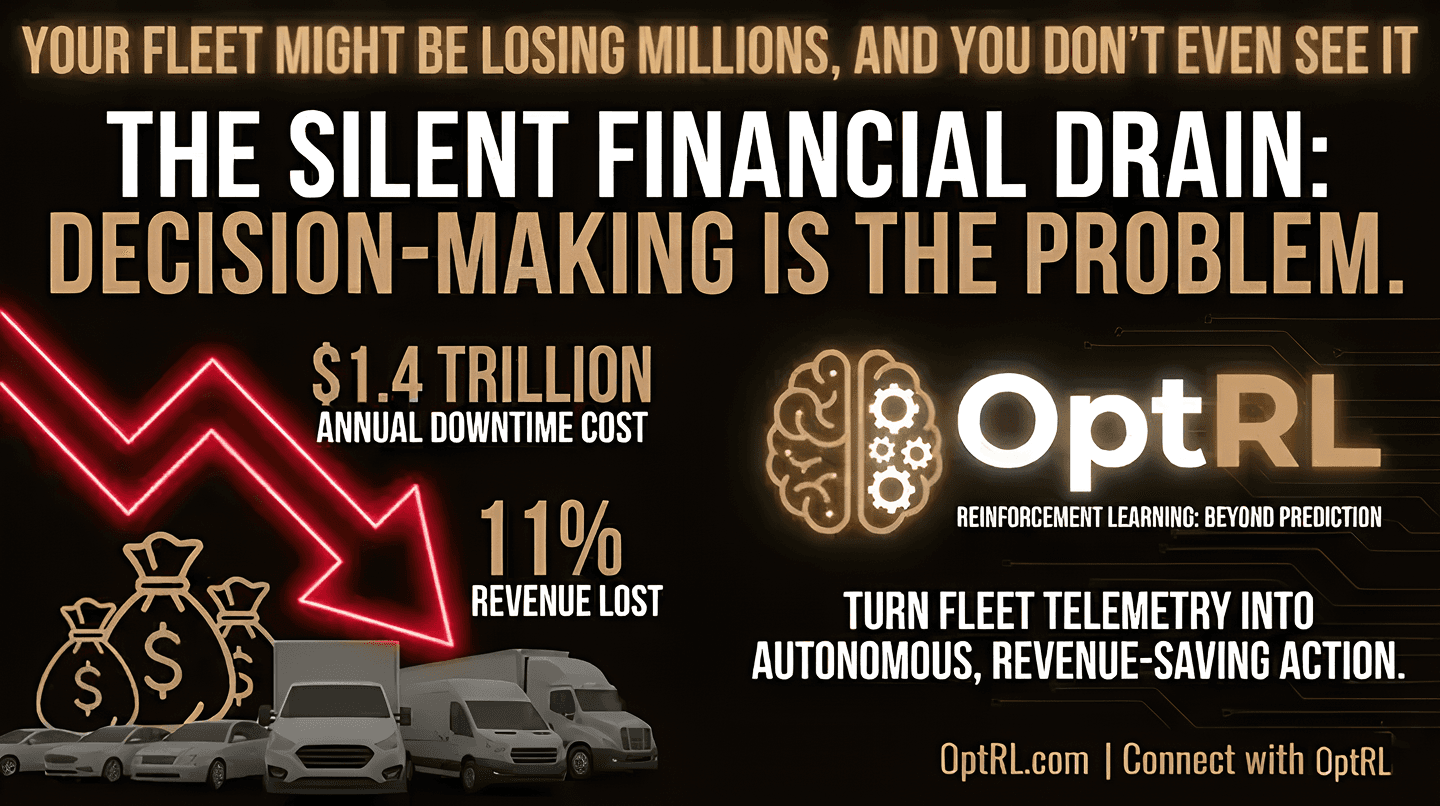
Your Fleet Might Be Losing Millions, And You Don’t Even See It
·8 min read
Reinforcement LearningEnterprise AIRLOps
OptRL provides enterprise reinforcement learning consulting and RL-as-a-service to design, deploy, and operate adaptive decision systems that continuously improve pricing, logistics, and operational performance in live environments.
Market data and operational benchmarks confirm that adaptive decision systems are becoming a core enterprise capability.
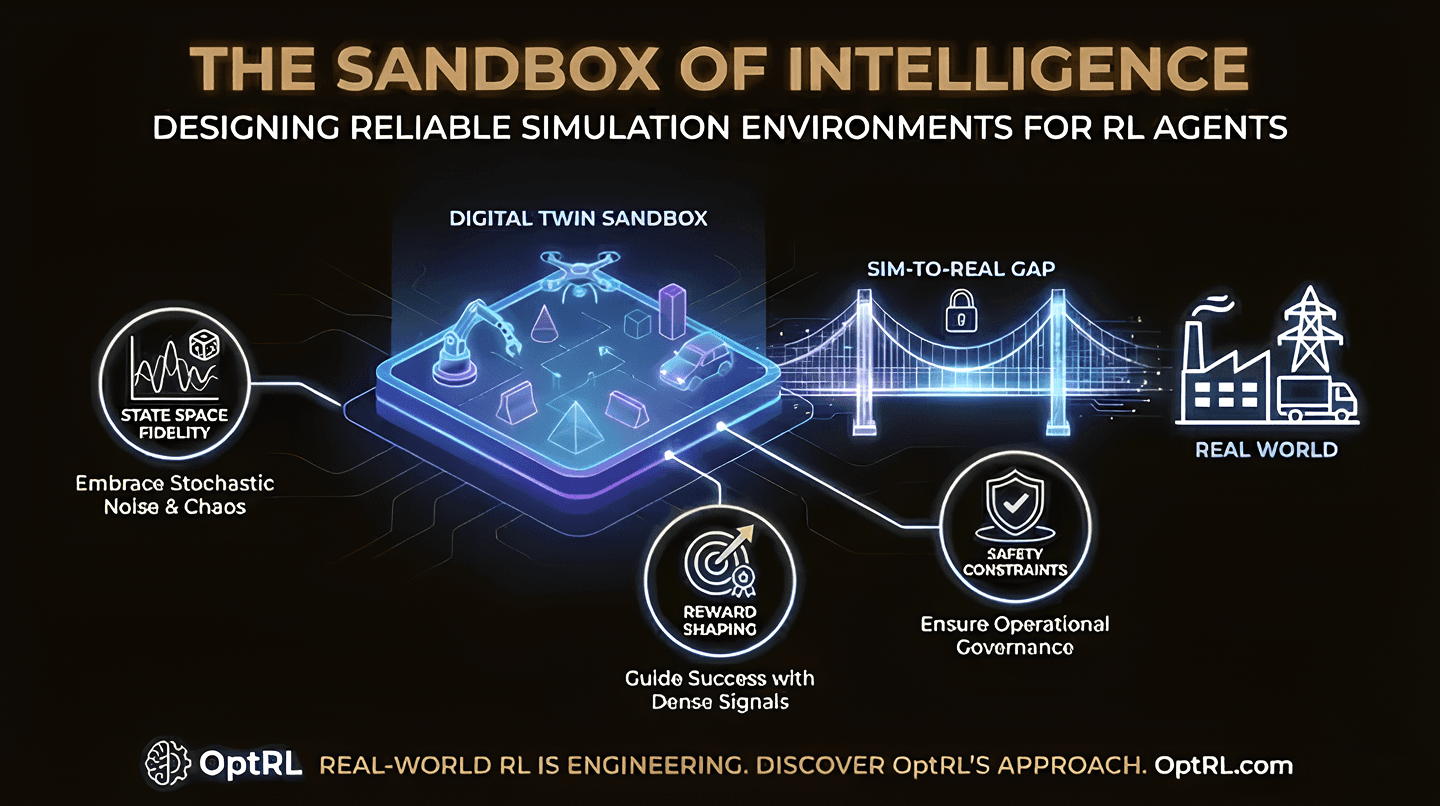
Domain-specific simulators let agents explore safely before production.
Policies evolve in real time based on fresh feedback loops.
Stress test strategies, analyze edge cases, and surface emergent behavior at scale.
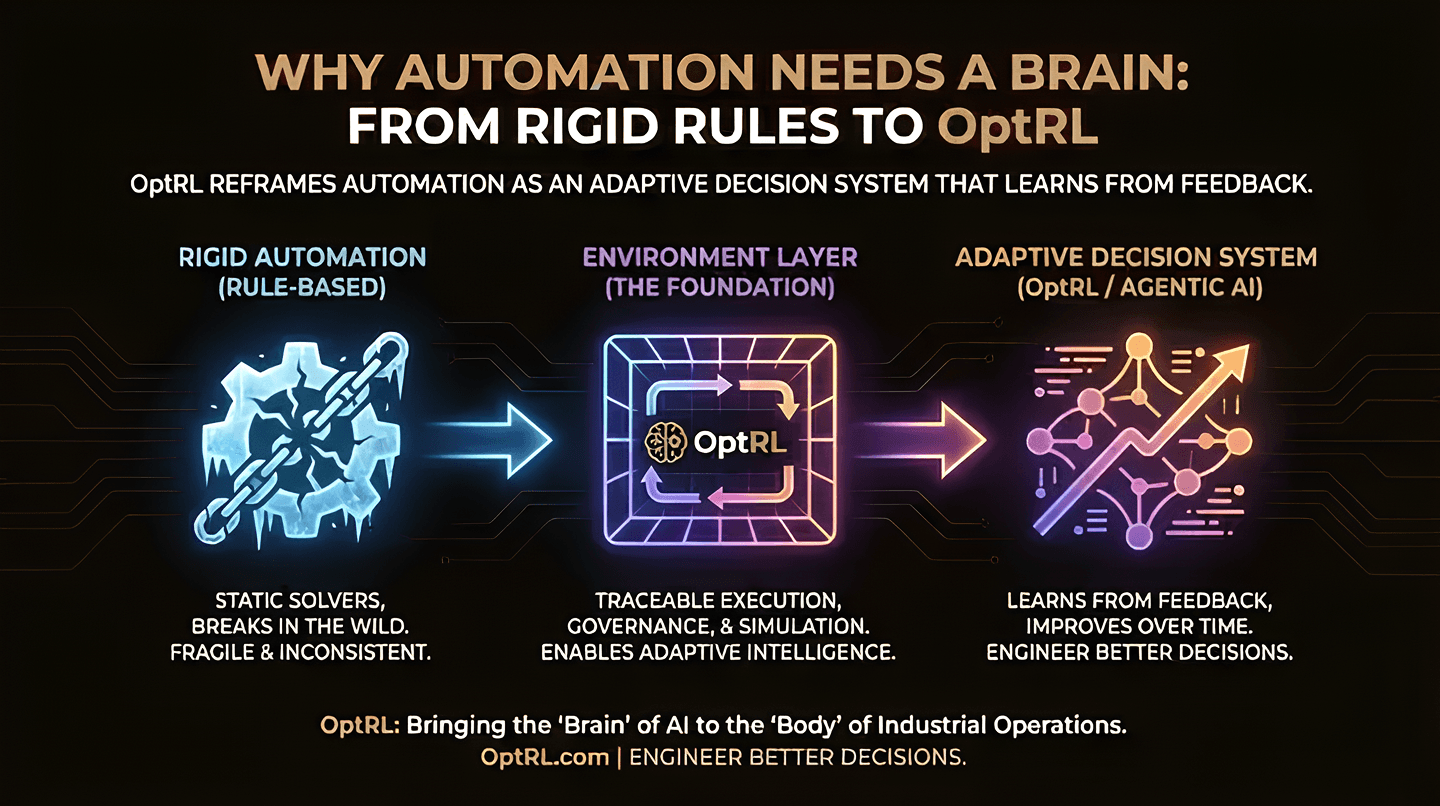
Evolve from static LLM workflows to continuous-learning pipelines that deliver measurable outcomes.
End-to-end enterprise reinforcement learning consulting, RL-as-a-service, simulation environment design, and RLOps infrastructure for production-grade decision systems. Our comprehensive AI consulting services span business strategy, simulation environments, policy engineering, production deployment, MLOps, and governance - designed to transform AI initiatives from proof-of-concept to production-grade business impact with measurable ROI. Each engagement is structured in business terms: who the workflow serves, what metric should improve, and what timeline defines a meaningful first result.
Translate business objectives into RL frameworks and experimentation roadmaps.
Ops, product, and strategy leaders aligning AI to measurable goals.
Clear success metrics, prioritized use cases, and a practical rollout plan.
Typical first milestone: 1-2 weeks for discovery + KPI framing.
Embed decision layers within CRM, ERP, and workflow systems.
Teams that need AI decisions embedded in existing systems and workflows.
Operational handoff from pilot to real usage with lower adoption friction.
Typical first milestone: API/integration plan and deployment path.
Each solution ships with embedded measurement, governance, and Agentic Guardrails to jumpstart production impact across growth, operations, and intelligence workloads. These are outcome-focused building blocks for business teams, not just technical demos.
Ensemble bandits + hierarchical clustering for in-the-moment personalization.
RL-driven real-time pricing adjustments.
Agents that streamline operations by learning from every task.
Campaigns that self-tune based on reward signals.
Multi-agent simulation for fleets, supply chains, and infrastructure.
Full transparency into every policy decision.
OptRL invests in cutting-edge AI research and machine learning frameworks that push the boundaries of performance, safety, and ethical alignment - ensuring every AI deployment remains benchmarked, transparent, and responsible with built-in guardrails.
Benchmark agents on exploration, generalization, and safety metrics with transparent scorecards.
Teach agents to audit their own trajectories, revise strategies, and document reasoning trails.
Align policies with nuanced cultural and human values via value-sensitive reward engineering.
Engineer verifiably robust policies for high-risk domains with formal safeguards.
The next generation of enterprise AI and adaptive intelligence requires more than sophisticated algorithms - it needs Agentic Guardrails that ensure safety, ethical alignment, and reliability across the entire AI decision lifecycle. We also keep the process understandable for non-technical stakeholders: what will change, what outcomes to expect, what data is needed, and how progress will be reviewed.
MLOps and AgentOps observability with 45+ prebuilt production monitors.
AI Guardrails that enforce ethical alignment and prevent harmful autonomous actions.
Reward engineering, safety controls, and human-in-the-loop feedback systems for continuous improvement.
Executive dashboards with fairness metrics, model drift detection, and clear ROI tracking.
Discovery, pilot, and rollout phases with clear owners and decision checkpoints.
Business goals, access to relevant data, and a team contact who knows the workflow.
Pre-agreed metrics such as margin, service level, throughput, or time saved.
Regular updates on impact, risks, model behavior, and next deployment decisions.
OptRL bridges the gap between cutting-edge AI research and enterprise machine learning deployment. We align cross-functional teams around adaptive intelligence programs that deliver measurable business results across AI strategy, simulation, production deployment, and ongoing governance.
Translate reward signals into durable, auditable, high-impact business value.
We align cross-functional teams around adaptive AI programs that deliver measurable KPIs across business strategy, simulation environments, policy deployment, and ongoing governance - from concept to production AI systems.
Make continuous learning a scalable, managed capability for every enterprise.
Our teams combine AI researchers, machine learning engineers, and MLOps specialists who design transparent, evolving, and regulation-ready intelligent systems. We build autonomous learning pipelines your teams can inherit, understand, and trust - with explainable AI, ethical guardrails, and business value aligned with every decision maker and stakeholder.
Practical perspectives on enterprise reinforcement learning, simulation design, RLOps infrastructure, and adaptive decision systems.
Reinforcement Learning in Enterprise: Common Questions Answered