Introduction
Enterprise reinforcement learning represents a fundamental shift in how organizations approach decision-making in dynamic, complex environments. Unlike traditional rule-based systems or static machine learning models that predict outcomes, reinforcement learning systems actively learn optimal decision strategies through continuous interaction with real-world feedback.
This article explores why enterprises are increasingly adopting reinforcement learning, the technical and organizational factors driving this shift, and practical patterns for successful deployment at scale.
Static vs Adaptive Systems
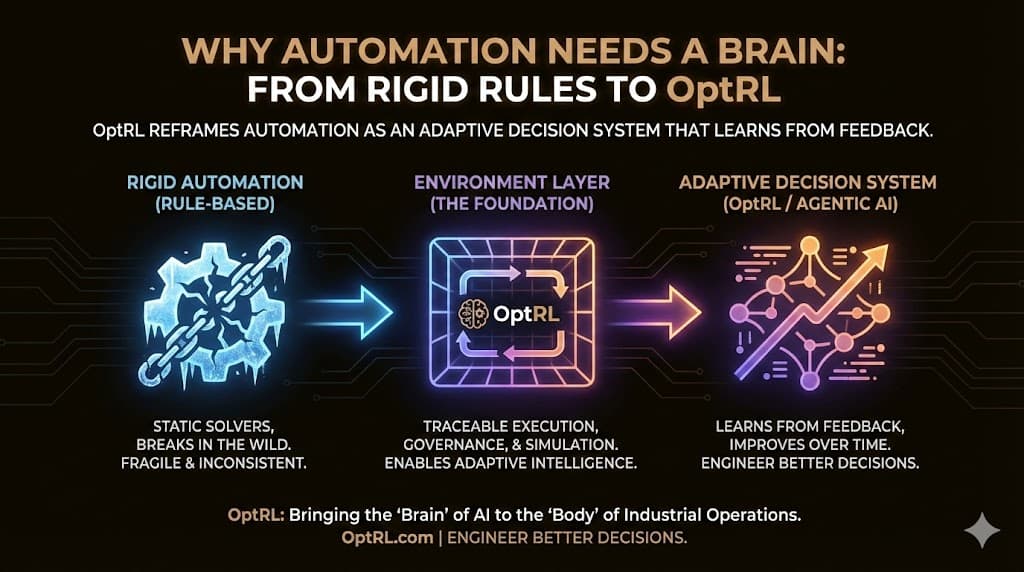
Traditional enterprise systems rely on static rules defined at design time. A pricing engine might use fixed markdowns, a supply chain system might follow predetermined inventory levels, and a marketing platform might execute campaigns based on historical segments. These systems work well in stable environments but break down when conditions change.
Adaptive systems powered by reinforcement learning continuously optimize their behavior based on observed outcomes. Instead of following fixed rules, they learn policies that map states to actions, maximizing long-term business objectives like revenue, margin, or customer lifetime value.
"The shift from static rules to adaptive policies is not just a technical upgrade—it's a fundamental change in how enterprises operate in dynamic markets."
Why Reinforcement Learning Now
Several converging factors make reinforcement learning viable for enterprise deployment in 2025:
- Computational infrastructure: Cloud-native simulation environments and scalable training infrastructure make it economically feasible to train and deploy RL systems.
- RLOps maturity: Production-grade tooling for monitoring, retraining, and governing RL systems has reached enterprise readiness.
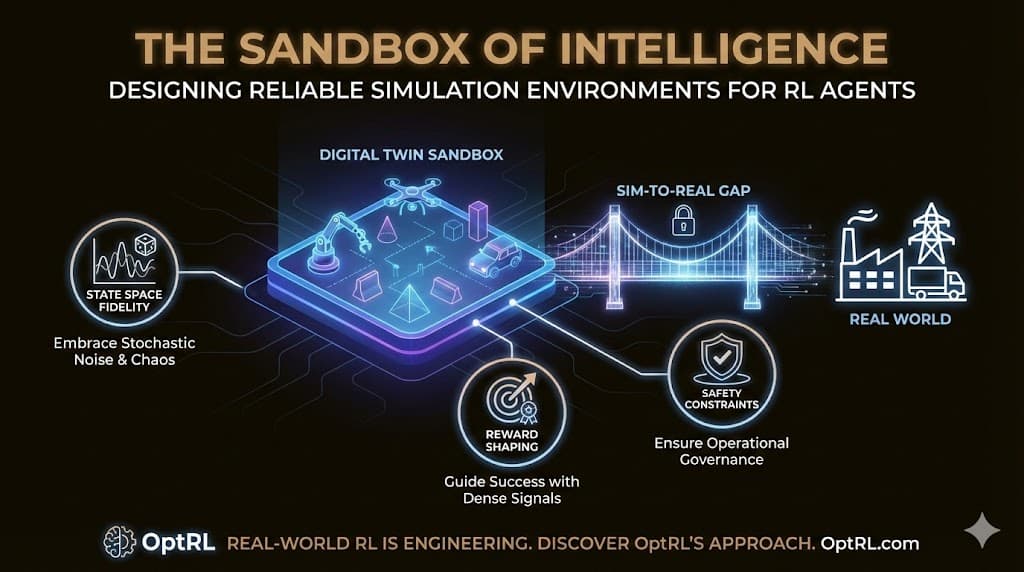
- Simulation technology: High-fidelity simulators enable safe experimentation before production deployment, closing the sim-to-real gap.
- Safety frameworks: Guardrails, constraint satisfaction, and human-in-the-loop controls address risk management requirements.
Enterprise Readiness Factors
Enterprise adoption requires more than algorithmic performance. Organizations need:
- Observability: Real-time monitoring of policy behavior, reward signals, and drift detection
- Governance: Audit trails, compliance reporting, and explainability layers
- Safety: Runtime guardrails that prevent catastrophic decisions
- Integration: APIs and connectors for existing enterprise systems
Production Deployment Patterns
Successful enterprise RL deployments follow a simulation-first pattern:
1. Define business KPIs and constraints
2. Build high-fidelity simulator
3. Train and validate policies offline
4. Deploy with guardrails and human oversight
5. Monitor performance and retrain continuously
This pattern minimizes risk while enabling continuous improvement from production data.
Real-World Case Studies
Leading enterprises are already seeing measurable impact from reinforcement learning:
Dynamic Pricing (Retail): A major retailer deployed RL for markdown optimization, achieving 12% margin improvement while maintaining inventory turnover targets. The system adapts pricing policies based on real-time demand signals, competitor actions, and inventory levels.
Fleet Management (Logistics): A logistics provider uses RL for dispatch and routing decisions, reducing empty miles by 18% and improving on-time delivery by 15%. The policy learns to balance short-term efficiency with long-term network effects.
Resource Allocation (Cloud Infrastructure): A cloud platform applies RL for workload scheduling and capacity planning, reducing infrastructure costs by 22% while improving service level agreement compliance.
Getting Started with RL
Organizations beginning their RL journey should:
- Start with a well-defined use case where decisions must adapt continuously
- Invest in simulation infrastructure before production deployment
- Build cross-functional teams spanning ML engineering, domain expertise, and operations
- Partner with experienced RL practitioners for initial pilots
- Implement robust monitoring and safety guardrails from day one
Conclusion
Reinforcement learning is transitioning from research curiosity to enterprise infrastructure. Organizations that successfully deploy adaptive decision systems gain a sustained competitive advantage in dynamic markets. The key is not just algorithmic sophistication, but operational excellence—simulation discipline, monitoring rigor, and safety-first deployment.
As markets become more dynamic and competitive, the ability to continuously optimize decisions through reinforcement learning will increasingly separate leaders from laggards.