Reinforcement Learning Insights & Applied Intelligence

Practical perspectives on enterprise reinforcement learning, simulation design, RLOps infrastructure, and adaptive decision systems.
Frequently Asked Questions

Reinforcement Learning in Enterprise: Common Questions Answered

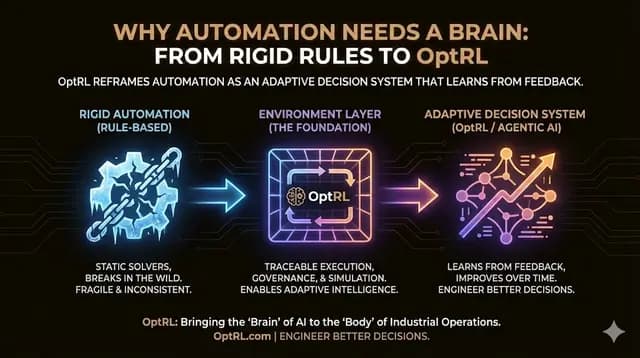
Enterprise reinforcement learning is a closed-loop machine learning approach where decision policies continuously improve from real-world feedback. Unlike static predictive models, reinforcement learning optimizes long-term business KPIs such as margin, service level, throughput, and efficiency by learning directly from outcomes in dynamic environments.
Traditional machine learning predicts outcomes from labeled historical data. Reinforcement learning learns decision strategies through trial, feedback, and reward signals. Instead of predicting what will happen, reinforcement learning determines what action to take to maximize long-term performance under changing conditions.
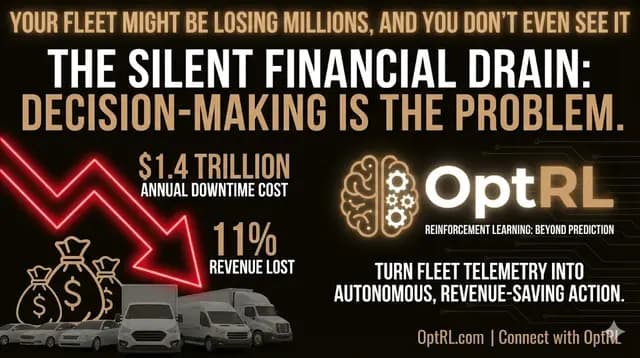
Reinforcement learning is especially effective in industries with dynamic decision environments, including retail pricing, logistics and fleet management, supply chain optimization, utilities and grid management, manufacturing workflows, and digital personalization systems where conditions shift frequently.
RL-as-a-service is a managed operating model where reinforcement learning systems are deployed, monitored, retrained, and governed continuously. It includes RLOps infrastructure, observability dashboards, safety guardrails, and performance measurement to ensure reliable production impact without building a full internal RL team.
A typical enterprise reinforcement learning engagement begins with a discovery phase of 1–2 weeks, followed by a pilot lasting 4–8 weeks. Full production deployment timelines vary depending on integration complexity, data readiness, and workflow scale.
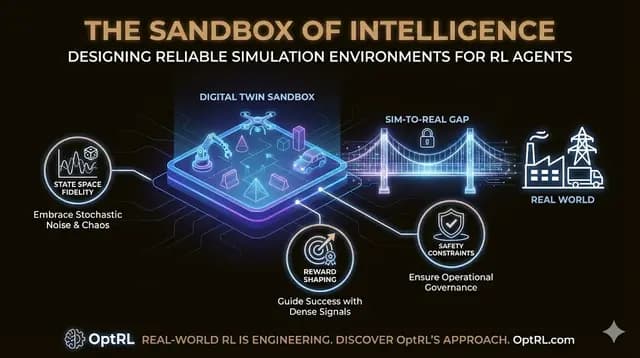
Most reinforcement learning pilots fail at deployment, not modeling. The sim-to-real gap, lack of monitoring infrastructure, insufficient reward design, and missing safety guardrails often prevent successful production rollout. Robust RLOps and governance are critical to closing this gap.
OptRL uses simulation-first experimentation, runtime guardrails, reward alignment frameworks, drift detection, human-in-the-loop controls, and observability dashboards. These mechanisms ensure that adaptive policies remain stable, auditable, and aligned with business constraints and compliance requirements.
Reinforcement learning performs best where decisions must adapt continuously. Common use cases include dynamic pricing, demand forecasting optimization, routing and scheduling, inventory allocation, personalized engagement systems, and resource coordination across complex operational environments.
Performance is measured against predefined KPIs such as revenue uplift, cost reduction, service level improvement, waste reduction, throughput gains, or conversion increases. Reinforcement learning systems are evaluated continuously using reward curves, drift metrics, and operational dashboards.
Yes, with proper governance. Reinforcement learning can be deployed in regulated industries when supported by safety guardrails, explainability layers, compliance reporting, and human oversight. Structured reward engineering and policy constraints ensure responsible and auditable decision behavior.